
Wilding Pines and the Quiet Abdication of Responsibility
By Charmaine Petereit, on behalf of the Tākaka Hill Biodiversity Group Trust.
Wilding pines are often framed as an ecological inconvenience, an unfortunate by-product of past land-use decisions, slowly creeping across the high country and conservation land. On Tākaka Hill, and across the South Island, the reality is far more confronting.
Wilding pines are not just a weed problem; they are a case study in how responsibility for New Zealand’s biodiversity crisis has been quietly devolved, not to well-resourced agencies, but to underfunded community groups and unpaid volunteers.
On Tākaka Hill, wilding conifers are transforming ecosystems, altering soil chemistry, displacing native species, increasing fire risk, and undermining decades of restoration work. None of this is new. The science is clear. The spread is predictable. The costs of inaction are well-documented.
What is less openly discussed is who is being left to deal with it.
Across Marlborough, Tasman, and much of the South Island, wilding pin control now relies heavily on community trusts, volunteers, short-term grants, and goodwill. Groups like ours are expected to plan, fundraise, monitor, report, and physically carry out work—often across challenging terrain—while central government retains strategic distance and local authorities juggle competing priorities.
This is not a partnership. It is abdication.
We are told that biodiversity protection is a national priority. Yet, in practice, the work is fragmented, under-resourced, and chronically reliant on people who are already stretched thin. Funding is limited or nonexistent. Long-term planning is impossible when every season depends on the following grant round. Meanwhile, wilding pines do what invasive species always do: spread faster than bureaucracy can respond.
There is a deeper issue here than trees.
When wealthy landowners can establish exotic forests with limited long-term accountability, when the ecological costs are externalised onto public land and community groups, and when volunteer labour is treated as an inexhaustible resource, we have created a system that rewards environmental risk-taking and penalises those trying to repair the damage.
On Tākaka Hill, the consequences are immediate and visible. Native biodiversity, including species found nowhere else, competes against an invasion it did not evolve to survive. Each year control is delayed, the scale and cost of intervention grow. Each year, community groups are asked to do more with less.
This page is not here to offer feel-good conservation stories or abstract concerns. It exists to document what biodiversity looks like on the ground, in real places, under current policy settings. It exists to connect science, lived experience, and accountability—and to be honest about where the system is failing.
Wilding pines are not inevitable. The erosion of responsibility is not inevitable either. But reversing either requires acknowledging that New Zealand’s biodiversity crisis cannot be solved by volunteers alone, no matter how committed they are.
If we are serious about protecting the landscapes and species we claim to value, the responsibility must sit where the power and resources sit—not quietly passed downhill to those already holding the line.
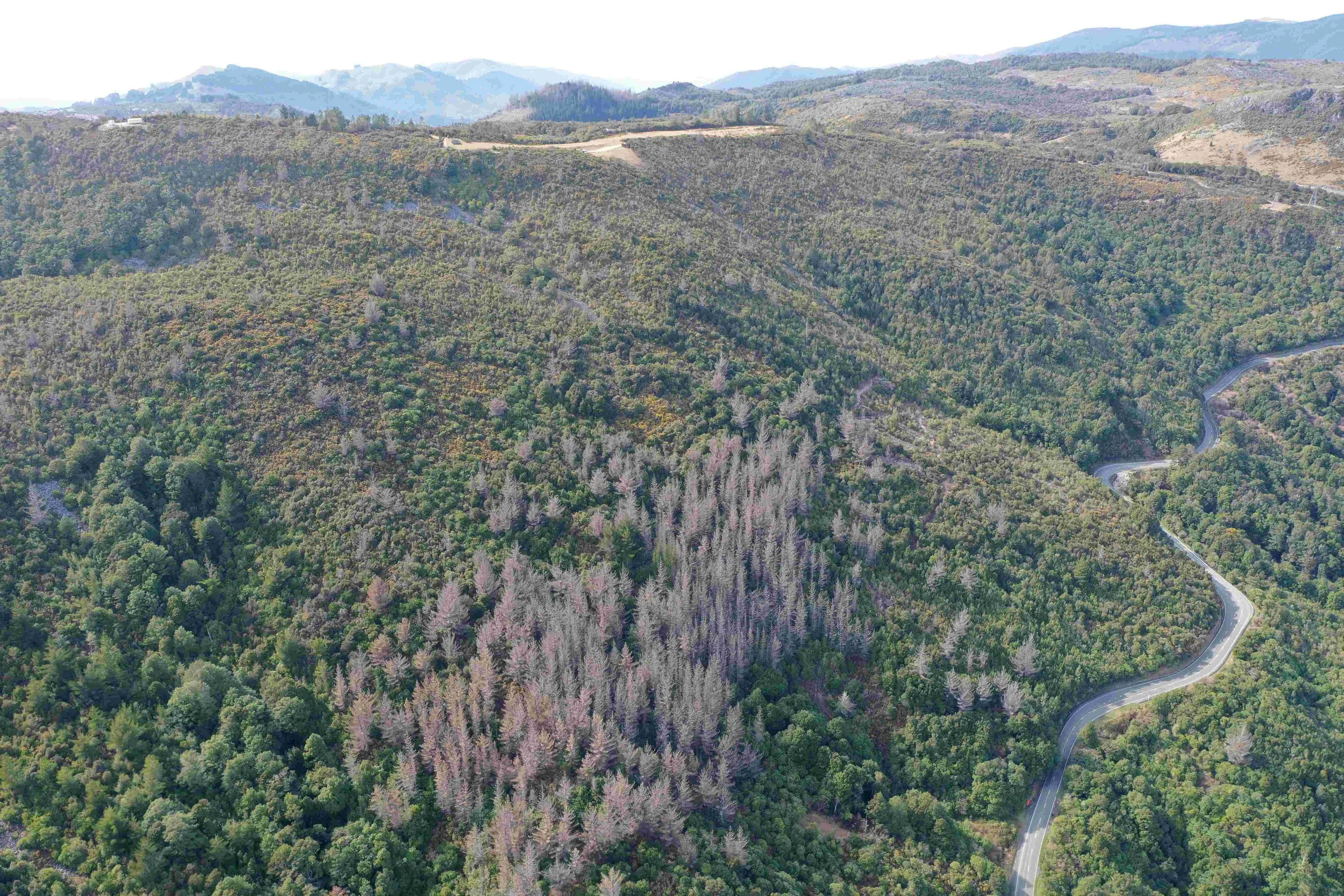
Wilding pine control in action 🌱
The Tākaka Hill Biodiversity Group Trust is restoring native ecosystems in the Tākaka Hill Scenic Reserve—protecting rare forest remnants and preventing the spread of invasive pines across this fragile landscape.