A black and white dog standing on a grassy field in front of distant mountains under a partly cloudy blue sky.

Our Whole Ecosystem Approach: Project Pikikirunga

Photo by Amanda Henderson - Abel Tasman National Park from Kairuru

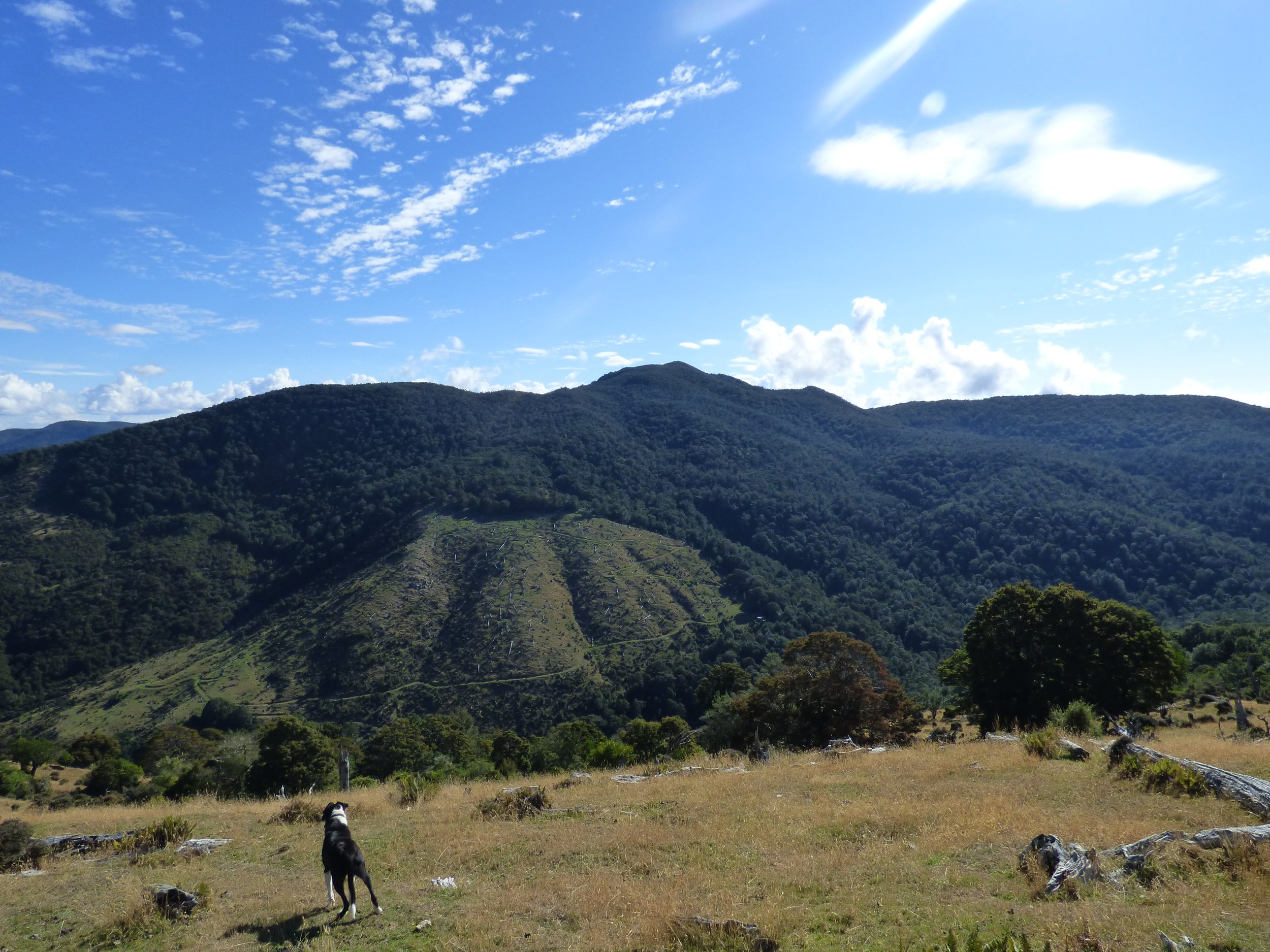
Pikikirunga: ‘Climb Up High’ reflects the Trust's name and vision for its whole-ecosystem approach to restoration and protection projects on Tākaka Hill, including private land and neighbouring Abel Tasman and Kahurangi National Parks. The Pikikirunga Range dominates the landscape of Tākaka Hill as well as Golden and Tasman Bays.

Author of Rocks and Hard Places – The Tākaka Hill, Cliff Turley, describes Tākaka Hill, also known as The Marble Mountain, as follows: “The chaotic landscape of marble protrusions, sinkholes, tomo and caves is the outstanding geological feature of the Tākaka Hill, a source of fascination to all who pass over it.”

The Pikikirunga Range was uplifted along the Pikikirunga fault line, forming the steep western scarp above the Tākaka Valley, with a gentler slope toward the Riwaka Valley. Tākaka Hill's distinctive geology and location have fostered the evolution of remarkable indigenous species, which the Trust is working diligently to restore and protect.

Open field with a dog standing and looking toward distant green mountains, under a partly cloudy blue sky.

Project Pikikurunga: Our Whole Ecosystem Approach

Pikikirunga: 'Climb Up High' encompasses the Trust's name and vision for its whole ecosystem approach to restoration and protection projects on Takaka Hill's private and neighbouring Abel Tasman and Kahurangi National Parks. The Pikikirunga Range dominates the Takaka Hill and Golden and Tasman Bays landscape.

Author of Rocks and Hard Places - The Takaka Hill, Cliff Turley, describes Takaka Hill, also known as The Marble Mountain, as "The chaotic landscape of marble protrusions, sinkholes, tomo and caves is the outstanding geological feature of the Takaka Hill, a source of fascination to all who pass over it."

The Pikikirunga Range was uplifted along the Pikikirunga fault line to form the steep western scarp rising above the Takaka Valley with a gentler dip to the Riwaka Valley. Takaka Hill's unique geology and location have seen the evolution of equally unique indigenous species that the Trust is working hard to restore and protect.

Close-up of a breakfast sandwich with egg, cheese, and sausage in a toasted bun.
A black circular arrow diagram indicating recycling or continuous process.
Snail Monitoring
Lizard Monitoring
Acoustic Bird Monitoring
Cave Fauna Survey + DNA Analysis
Recycling Depot
Pest Plant Control

OUR WHOLE ECOSYSTEM APPROACH

Plant Propagation
Predator Control
Karst Cave Fauna, Cave and Tomo Entrances
Wilding Pines
Wasp Control
Hawkes Lookout
Goat Control
Habitat Restoration

A whole-ecosystem approach acknowledges the value of biodiversity beyond individual species. Ecosystems consist of a diverse array of species, each playing a unique role in maintaining ecosystem balance and function. By protecting and restoring entire ecosystems, we conserve biodiversity and support the long-term sustainability of native species.

OUR WHOLE ECOSYSTEM APPROACH

A whole ecosystem approach acknowledges the value of biodiversity beyond individual species. Ecosystems consist of a diverse array of species, each playing a unique role in maintaining the overall balance and functioning of the ecosystem. By protecting and restoring entire ecosystems, we help conserve biodiversity and promote the long-term sustainability of native species.

Charlie Hayford National Park Halo Predator Control Project Takaka Hill Biodiversity Group Trust
A warning sign with a mouse silhouette inside a red circle and a diagonal line crossing through it, indicating no mice allowed.

National Park Halo Predator Control Project

This project aims to protect native plants and animals from Abel Tasman National Park and Kahurangi National Park by controlling rats, stoats, and possums on private land on Tākaka Hill, which lies between the two parks. By reducing predators, we can help improve the natural balance of the environment and support the growth of vulnerable species like the whio duck. This will benefit the ecosystem and allow other species like kaka and pateke to expand their habitats onto private land.

Charlie Hayford Takaka Hill Pest Plant Control Takaka Hill Biodiversity Group Trust
Illustration of a chainsaw with a green outline against an orange watercolor background.

Tākaka Hill Pest Plant Control

In 2019, a thorough study was done to identify and manage pest plants on private land on Tākaka Hill with the help of funding from the DOC Community Conservation Fund. The study identified 48 pest plants on Tākaka Hill, and more may be found during control efforts. Some pest plants are considered high priority for eradication because they are known to be harmful, are not widespread, or are isolated. The goal is to manage these pest plants effectively through a detailed plan.

Hawkes Lookout Restoration and Protection Project Takaka Hill Biodiversity Group Trust

Illustration of a park bench with two trees, a sun, and clouds in the background, all in a circular orange watercolor style.

Hawkes Lookout Restoration & Protection

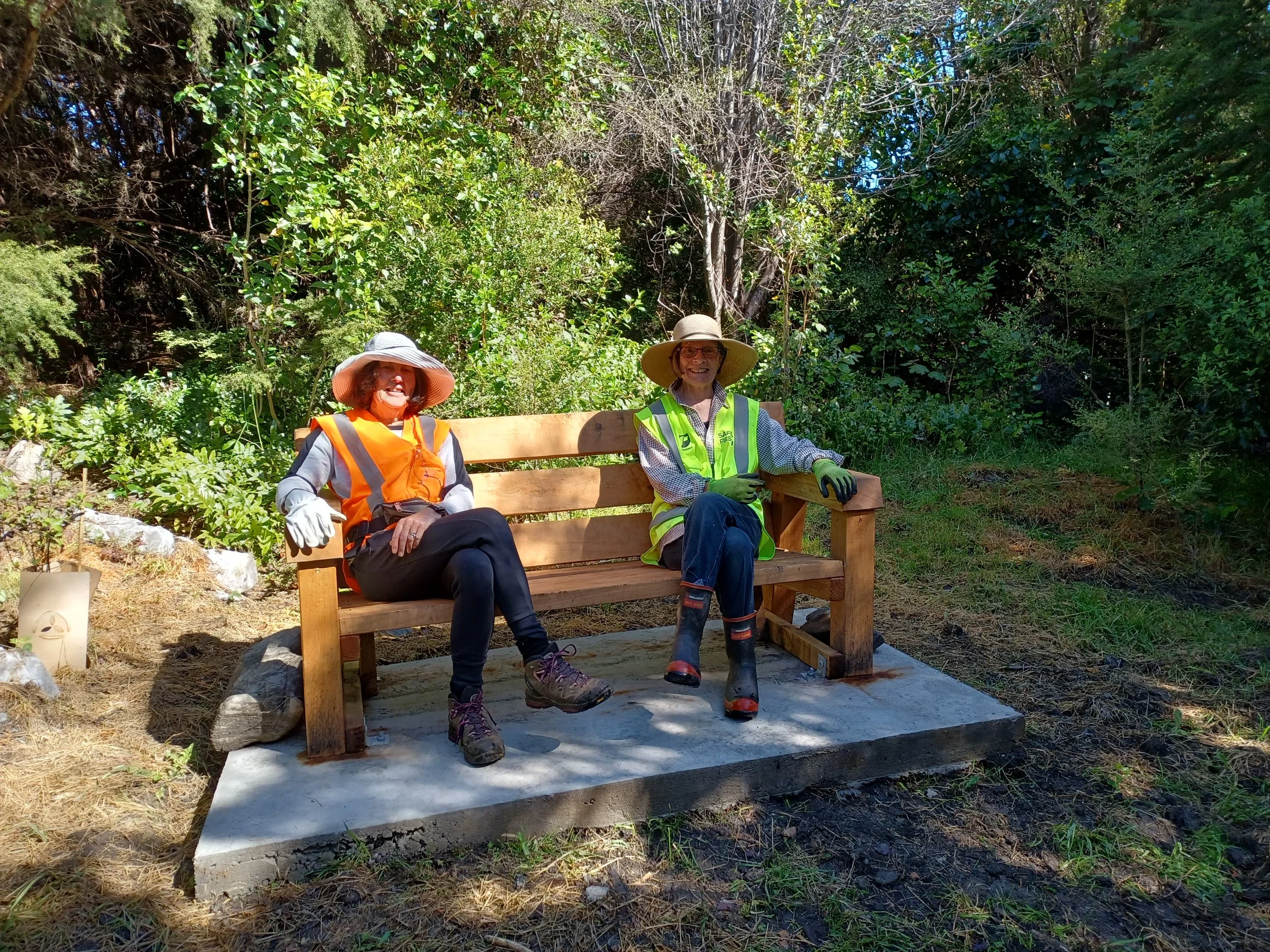
The Trust collaborates with DOC Motueka to lead restoration efforts at Hawkes Lookout. Offering a range of volunteer opportunities, the Trust organises working bees for planting, clearing around new vegetation, managing pest plants, and conducting predator control. In a notable achievement in 2022, the Trust and DOC Motueka installed a macrocarpa seat along the path to the Hawkes Lookout viewing platform for public enjoyment.

Takaka Hill Community Recycling Depot Takaka Hill Biodiversity Group Trust

A stylized illustration of the recycling symbol with three green arrows forming a triangle, set against an orange watercolor background.

Tākaka Hill Community Recycling Depot

The Trust’s whole-ecosystem approach is exemplified by its involvement in establishing the Tākaka Hill Community Recycling Depot in 2020. Previously, residents had to travel over 30 km to dispose of their recycling at the Motueka Resource Recovery Centre. Through a successful application to the 2020 Tasman District Council (TDC) Community Environmental Grant, the Trust helped create a local facility, reducing travel distances to just a few kilometres. Ravensdown Ngarua Lime Works generously provided the land, carried out earthworks, and supplied construction materials. Collaborating with Waka Kotahi NZTA and Smart Environmental Ltd, the Trust ensured the depot met all safety requirements for the convenient and secure drop-off of recycling items along a State Highway.

Aerial view of wilding pine control.

Line drawing of four pine trees with small clouds above them, on an orange watercolor background.

Wilding Pine Control Project

In 2020, the Trust secured a significant grant from the MPI Community Partnership Wilding Pine Fund, enabling the control of over 8,000 wilding conifers across more than 4,000 hectares of Tākaka Hill private land. This project, completed with Jobs for Nature funding as part of the National Wilding Conifer Control Programme facilitated by Biosecurity New Zealand (BNZ), a Ministry for Primary Industries (MPI) business unit, marked a major milestone in controlling invasive conifers.

Building on this success, in 2021 the Trust received another substantial grant to expand control efforts to an additional 876 hectares, including areas within Abel Tasman and Kahurangi National Parks. In total, 65,000 wilding pines were controlled over the funded period. Without the invaluable support provided to this land-rich, low-population community navigating complex subalpine karst terrain, achieving effective wilding pine control over three years would have taken up to 25 years. This holistic ecosystem approach has significantly accelerated restoration efforts and amplified conservation impact in the region.

A snail with a dark, spiraled shell and a gray, textured body moving through green grass near a rocky area.

Line drawing of a snail with a coiled shell inside an orange watercolor background.

Snail Monitoring Project

The Trust places a special focus on conserving the endangered carnivorous Ngata nui (giant land snail), Powelliphanta hochstetteri, which was downgraded in the 2024 Conservation Status of New Zealand Indigenous Terrestrial Gastropoda (slugs and snails) from nationally critical to nationally endangered.

To monitor and protect populations of Powelliphanta hochstetteri, the Trust has established a 70 × 70-metre monitoring plot on the Tākaka Hill Walkway. These snails thrive in the sub-alpine beech forest habitat, evolving within the region's limestone and marble karst formations.

Through ongoing monitoring, the Trust aims to gather valuable insights on the best strategies to safeguard this native taonga (treasure). By adopting a whole-ecosystem approach that considers the interplay of geological features, biodiversity, and environmental threats, the Trust is committed to ensuring the long-term conservation of this iconic species and its habitat.

Close-up of a wasp with black and yellow markings on its face and body, on a rocky surface.

Stylized illustration of a bee inside an orange circle background.

Vespula Wasp Control Project

New Zealand has some of the world’s highest densities of social wasps. They are voracious predators with no natural enemies here; our mild winters and abundant food allow them to outcompete native insects and birds. Since 2018, the Trust has been deploying Vespex bait stations annually to control Vespula wasps, including German and common species.

The beech forests of Tākaka Hill and the South Island provide a unique resource – honeydew, which is essential to the beech forest ecosystem. Native bats and birds such as tui, kaka, and korimako, as well as fungi and insects, rely on honeydew year-round.

Honeydew is produced by a small insect that lives under the bark of beech trees. It drips onto the bark and the surrounding ground, feeding black sooty mould fungi that eventually cover the tree’s bark. These fungi serve as an important food source for many native animals and insects.

Three women and one man are in a garden near a wooden fence and a grassy field, preparing seedlings and gardening supplies on a table.

Line drawing of a trowel and a potted plant with two leaves, set against an orange watercolor background.

Endemic and Native Plant Propagation

Native forest once covered most of Aotearoa, New Zealand, supporting unique biodiversity found nowhere else in the world. Today, most forests remain as remnants on Public Conservation Land (PCL) and private land, many of which are too small to support species requiring large breeding areas. Evidence suggests approximate minimum home range areas for some native birds: whio – 30,000 ha; kaka, kiwi, and kea – 10,000 ha; kakariki – 5,000 ha; toutouwai – 2,000 ha; and kereru, tui, fantail, tomtit, and silvereye – 1,000 ha.

The Trust runs an active plant propagation programme led by trustees and community members who collect native and endemic species from Tākaka Hill private land and lead teams of volunteers on seed-collecting trips. Seedlings are nurtured in the nursery until ready for planting. This propagation programme forms part of the Trust’s broader habitat restoration work, which includes Public Conservation Land, Hawkes Lookout, and private land on Ravensdown Ngarua Limeworks. The goal is to restore and connect native forest habitats, extending the home range of native species.

Takaka Hill Cave Fauna Survey Project

Illustration of a green insect larva, a ruler, and an orange textured background.

Tākaka Hill Cave Fauna Survey Project

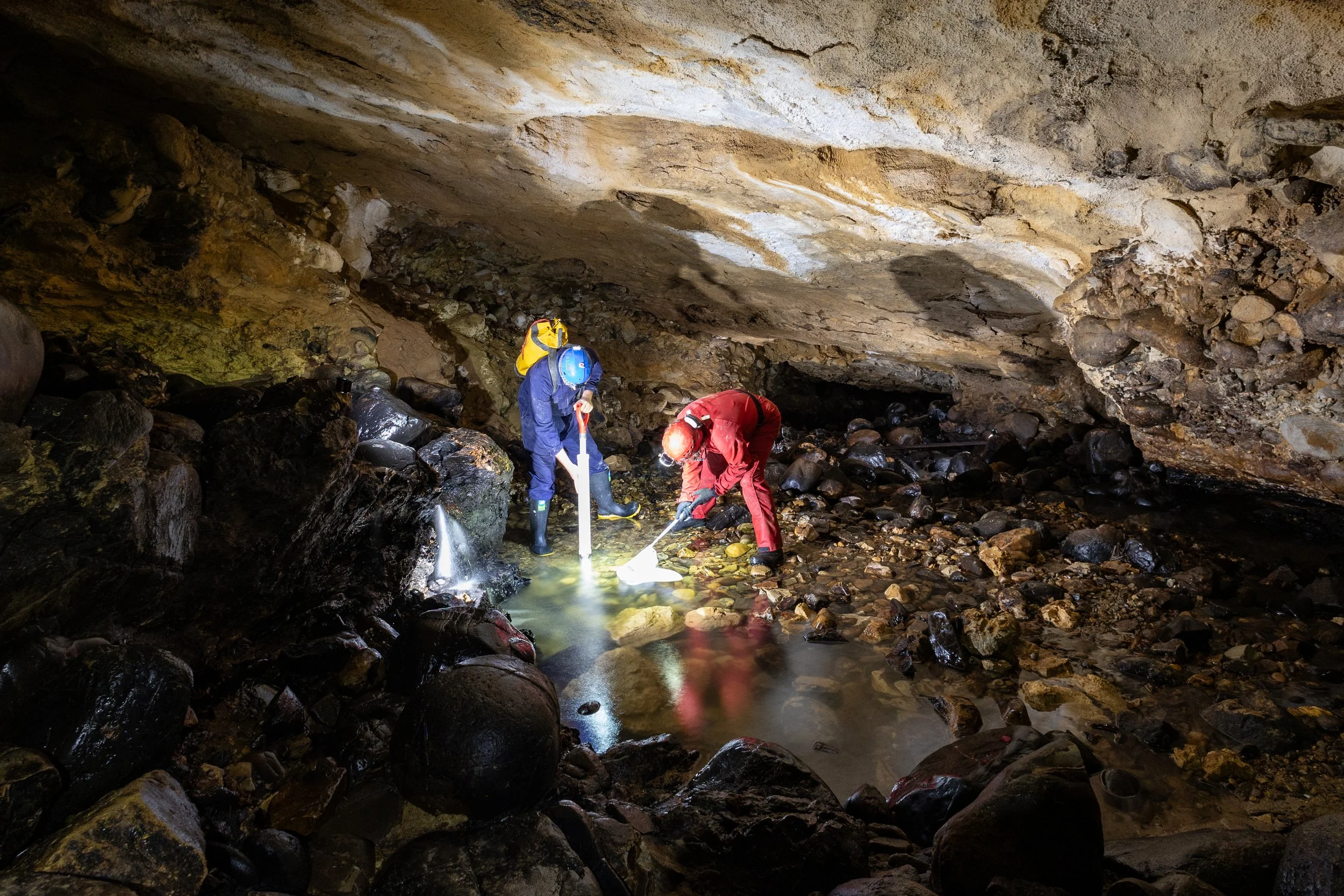
Beneath Tākaka Hill lie kilometres of caves formed over millions of years as surface water dissolved cracks in the marble, creating caverns—some the size of multi-level buildings. Although cave-dwelling species, called troglobites, inhabit these subterranean ecosystems, very little is known about them.

The Trust is collaborating with Anna Stewart and her team of caving specialists, photographers, and invertebrate experts from the Museum of New Zealand Te Papa Tongarewa to learn more about New Zealand’s cave fauna. In January 2025, Anna and her team surveyed, recorded, and collected specimens that were sent to Te Papa and Massey University.

Thanks to newly secured funding from the 2026 QEII National Trust Stephenson Fund, the project will continue for another year. This next phase will take the research deeper underground, shifting from the twilight zones to the stable dark zones of Tākaka Hill’s cave systems. These environments—completely absent of natural light—harbour some of the most specialised and little-known species on the planet, many of which have evolved unique adaptations for life in total darkness.

One of the project’s future goals is to run genetic sequencing to determine how closely related species are between different caves within a karst area, and between separate karst systems, if found in more than one location. The expanded research will further support this work by increasing understanding of subterranean biodiversity and the ecological relationships hidden beneath the hill.

A bird with a dark green and iridescent blue head and a white belly, perched on a branch of a flowering tree with white blossoms.

Illustration of a bird singing with musical notes around it, set against an orange watercolor background.

Acoustic Bird Monitoring

Recording bird songs helps assess the return of native birds as ecosystems are restored and protected. The Trust uses this methodology because it is less labour-intensive and more consistent in correctly identifying bird songs than traditional 5-Minute Bird Counts conducted by volunteers. All recordings are stored as sound files, which can be re-examined as software and AI technology advance.

Over the past 12 months, DOC AR4 acoustic recorders have been deployed at 28 locations across a variety of habitats, including regenerating broad-leaved indigenous hardwood scrub, mixed exotic shrubland, indigenous forest bordering Abel Tasman and Kahurangi National Parks, and manuka and kanuka areas. The recorders are placed in the same locations annually to monitor the presence of native birds.

Over time, acoustic monitoring provides estimates of occupancy, which can serve as a surrogate for abundance. Each AR4 recorder records for two hours at sunrise and sunset over a two-week period. After retrieval, the sound files are downloaded and processed using AVIANZ open-source software.

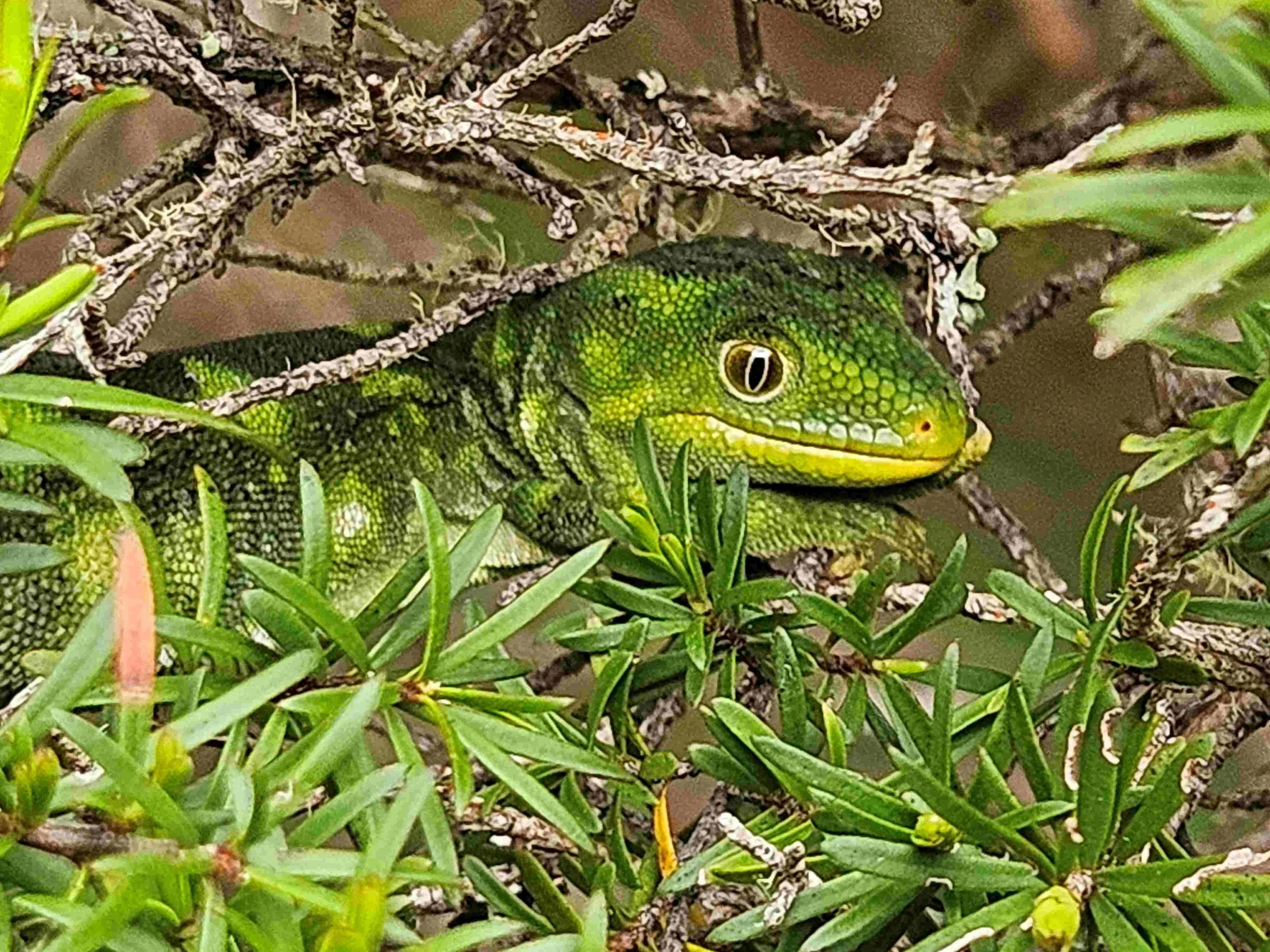
Nelson green gecko native to Takaka Hill

Illustration of a gecko or lizard on an orange circular background.

Gecko and Skink Survey Project

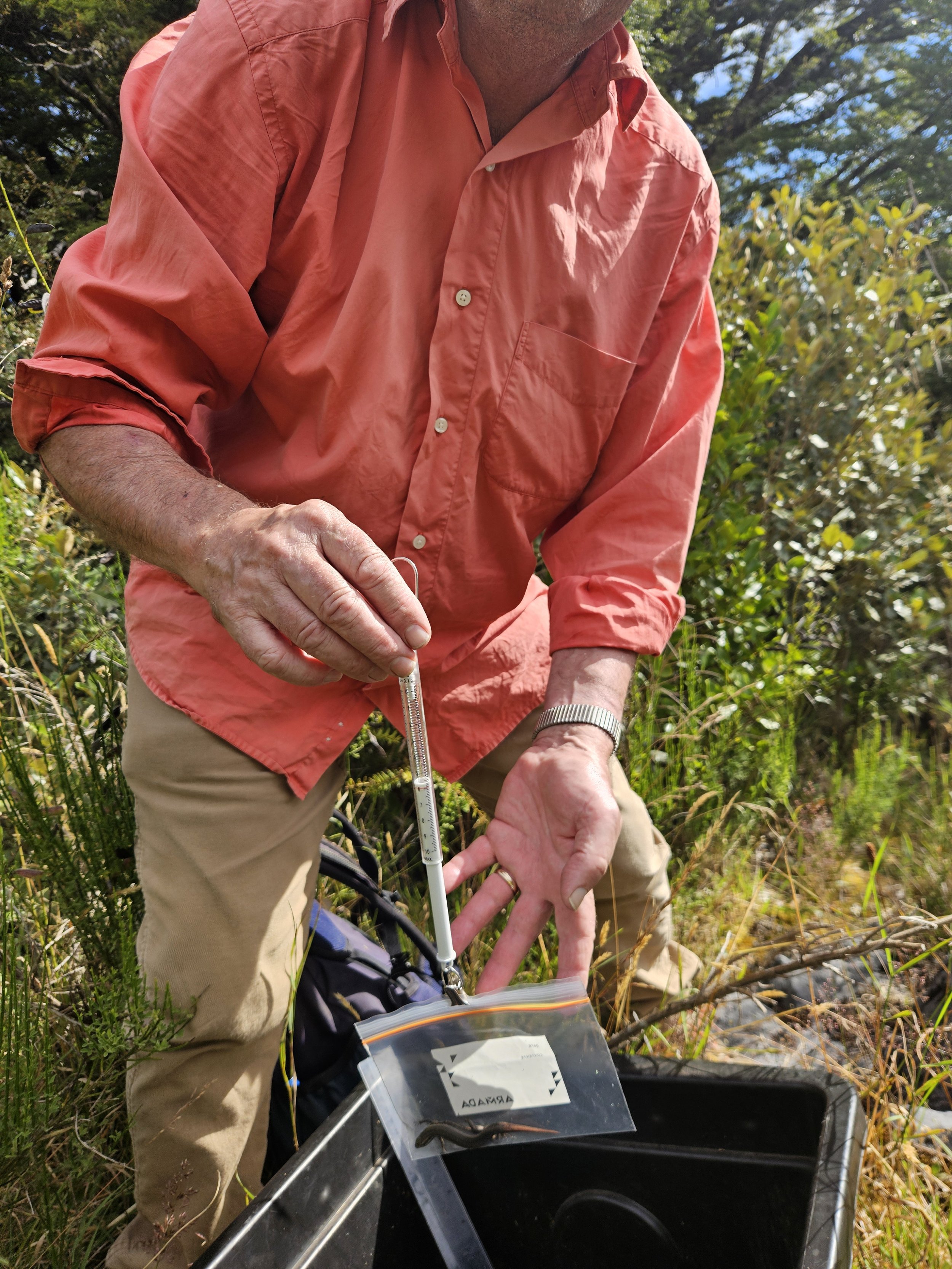
The Trust's Gecko and Skink monitoring programme began in July 2022, with Artificial Cover Objects (ACOs) made by volunteers placed along transects on the Tākaka Walkway and other private lands. DOC Motueka supports the project, along with in-kind assistance from herpetologist Graham Ussher of RMA Ecology.

Through these ACO transects, the Trust can determine population trends by monitoring occupancy of two relatively common endemic lizards: the Northern grass skink (Oligosoma polychroma) and the Raukawa gecko (Woodworthia maculata). The transects also allow surveys via foliar visual methods (Boffa Miskell method) or nighttime surveys for eyeshine of the less frequently observed—but recently recorded—Nelson green gecko (Naultinus stellatus).

Dog standing on rocky hillside with sparse greenery and a clear blue sky in the background.

A prohibition sign with a goat inside, indicating no goats allowed.

Goat Control Project

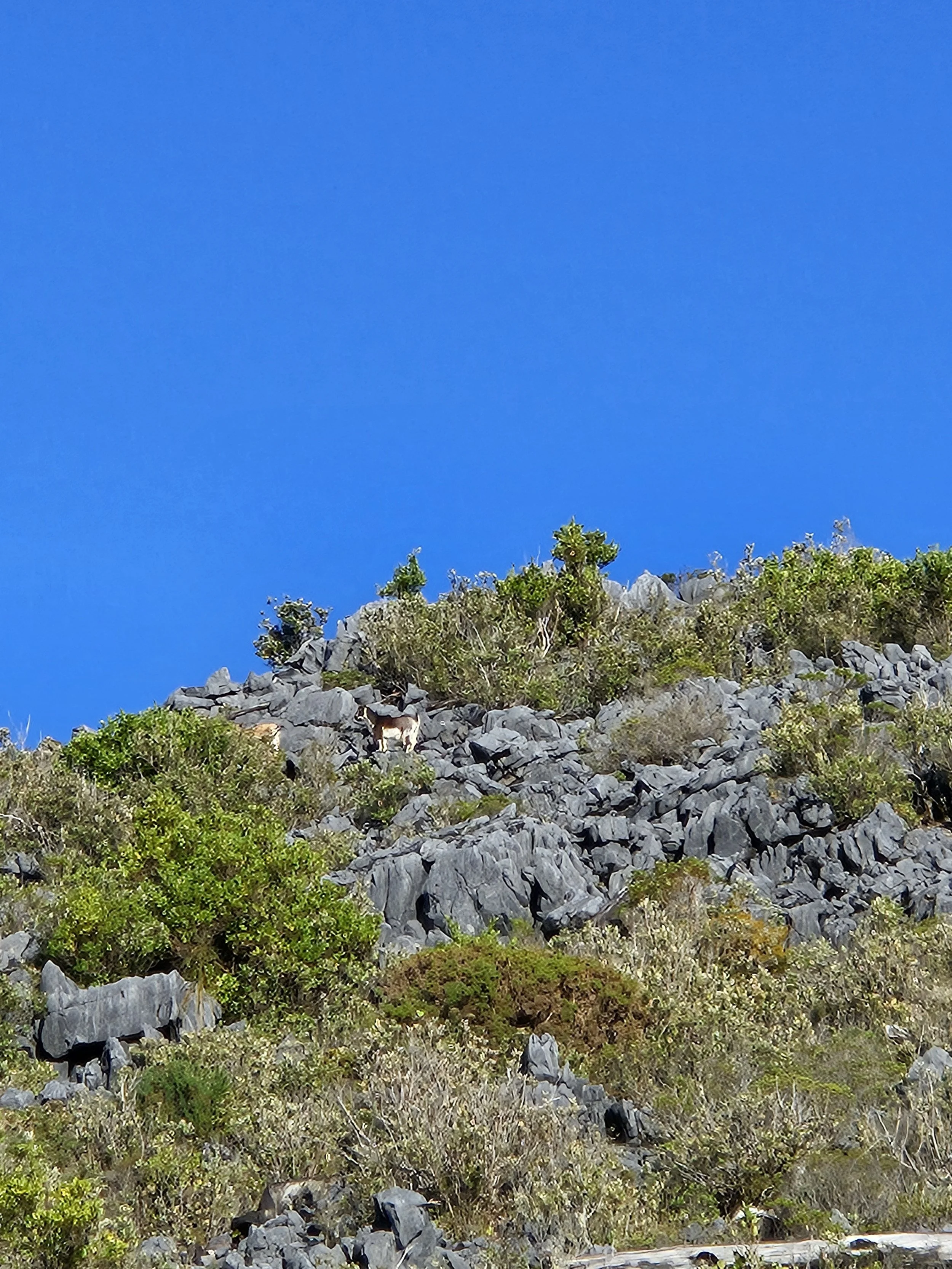
Native vegetation on Tākaka Hill has been significantly impacted by introduced mammals, which have altered the structure and composition of native forest ecosystems and hindered regeneration on retired SNA farmland. Possums cause extensive forest canopy collapse, while deer and goats browse the understorey, compounding the impact alongside rodents on forest ecosystems and regeneration.

In partnership with Ravensdown and local landowners, and in collaboration with DOC and Project Janszoon, the Trust has implemented a three-year goat control programme on Tākaka Hill private land bordering Abel Tasman and Kahurangi National Parks. Goats move between the park and private land, and the Trust’s contracted hunter, familiar with goat routes, has the social licence to hunt on the largest private land areas adjacent to ATNP and KNP.

Person standing on moss-covered rocks outdoors, looking at a mossy rock face in a lush, green forest

Illustration of a mountain with a magnifying glass in front of it on an orange background.

Karst Cave Fauna, Cave and Tomo Entrances Fauna & Flora Project

Thanks to funding from the 2022 Rātā Foundation grant and collaboration with the New Zealand Speleological Society, the Trust conducted a baseline survey of subterranean habitats and troglobite cave fauna, led by Anna Stewart and her team, as part of its ecosystem restoration efforts on Tākaka Hill.

Building on this work, funding from the 2023 Rātā Foundation and the 2023/24 Lotteries Environment & Heritage grant enabled the Trust to expand its Cave Fauna survey, carried out in January 2025. This expansion includes monitoring flora and fauna at cave and tomo entrances, which serve as vital indicators of the health of these critically endangered ecosystems. RMA Ecology leads this ongoing research, supported by dedicated Trust volunteers. A survey conducted in October 2024 contributed further data, with a report due before October 2025.

Tākaka Hill hosts unique animal life, including many species found nowhere else in the world. Its rich biodiversity results from a complex geological history of mountain uplift, faulting, glaciation, and changing sea levels. Tasman boasts New Zealand’s most extensive and diverse limestone and marble landscapes, each hosting localised fauna populations. The survey has successfully identified key cave fauna sites prioritised for biodiversity management, underscoring the importance of preserving these critical ecosystems.

Map of a surveyed fence line with points marked by labels, illustrating locations of culverts, gates, posts, stream flow, and trees within a forest area near a road, part of a biodiversity group trust for Takaka Hill, dated December 28, 2022.

Icon of three trees with lush green canopies and brown trunks on an orange watercolor background.

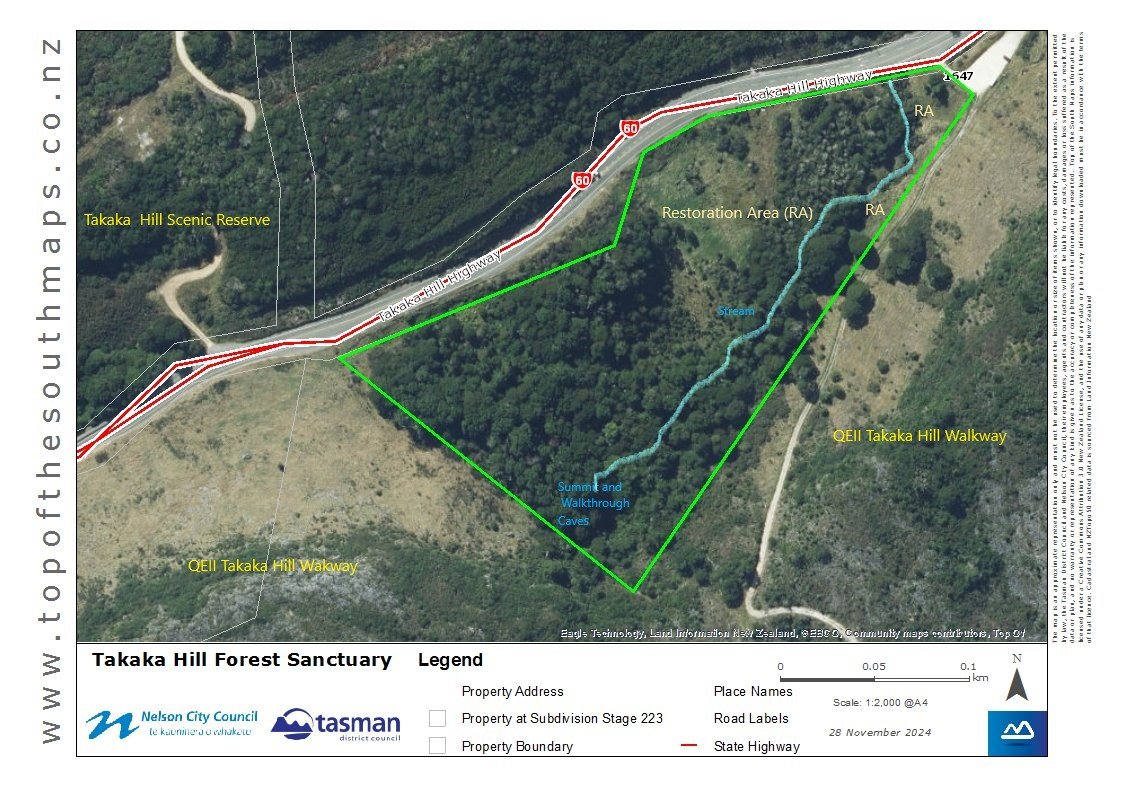
Tākaka Hill Walkway Forest Sanctuary Project

This project aims to protect and enhance threatened ecosystems on Tākaka Hill, including the endangered Powelliphanta hochstetteri giant land snail and other species reliant on intact forest and cave habitats. The Trust’s goal is to establish a forest sanctuary that safeguards biodiversity while also serving as a pilot initiative to diversify income through the sale of Biodiversity Credits.

The Trust intends to integrate this project into the Ekos BioCredita programme, which provides a pathway for conservation initiatives to secure funding via the sale of certified biodiversity credits. These credits are issued and monitored in the Ekos SD Registry, certified to an internationally peer-reviewed standard, and verified by independent third parties.

It is important to note that biodiversity credits from the Ekos BioCredita programme are not offsets. Instead, they represent nature-positive units that demonstrate measured, reported, and verified outcomes in biodiversity conservation.