
By Charmaine Petereit
Tākaka Hill Biodiversity Group Trust
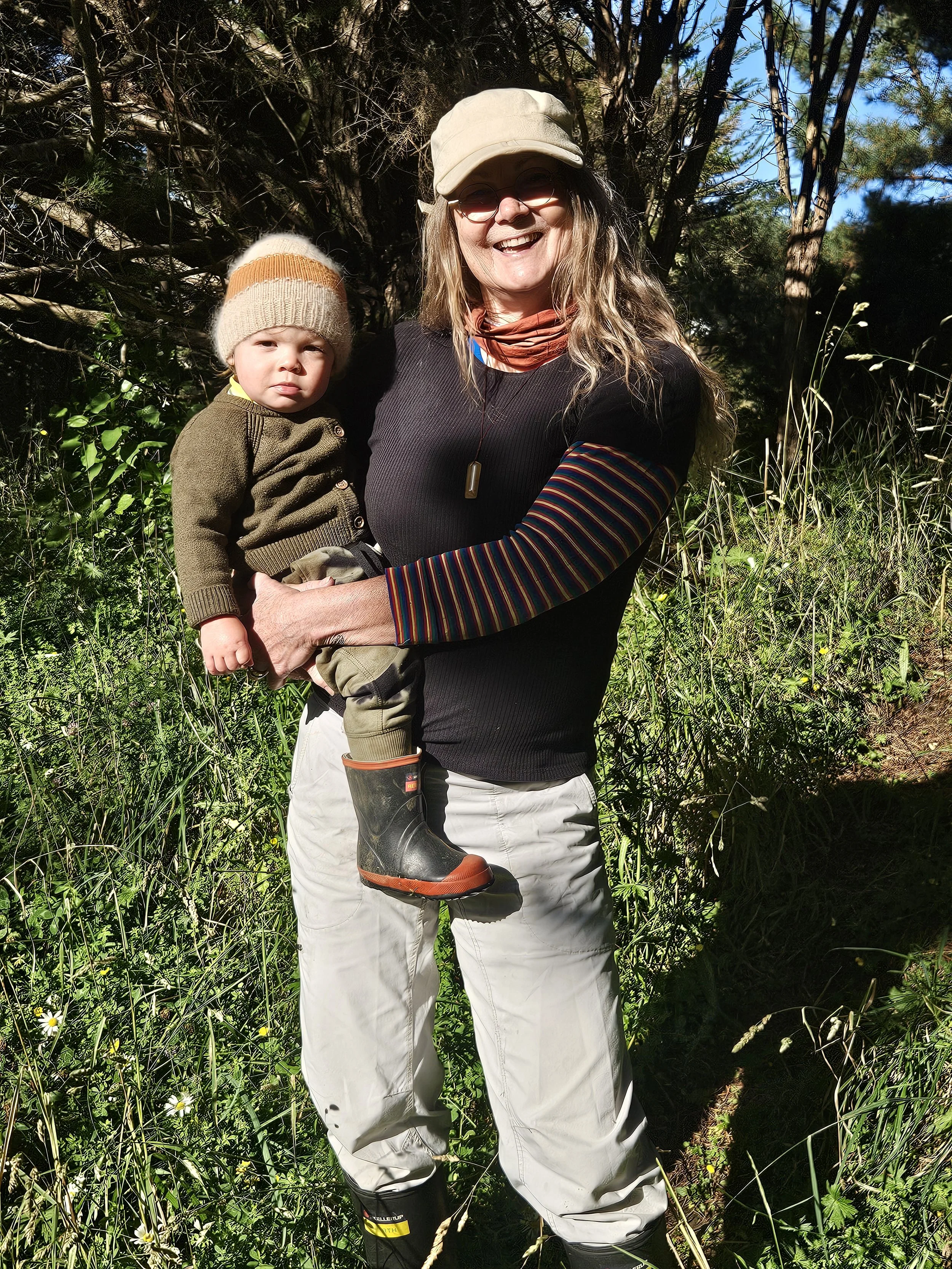
A connection with nature can begin long before the classroom. Our education system should help it grow.
30 October 2026
A connection with nature can begin long before the classroom. A walk through the bush, a bird calling overhead or the discovery of a snail beneath the leaf litter can spark questions that stay with us for life.
Our education system should help that curiosity grow into understanding. Every young person deserves the opportunity to learn how the natural world works, how we depend on it and how our decisions affect its future.
Through our conservation work on Tākaka Hill, I am continually reminded that environmental progress depends on people understanding why it matters. We need practical action, sound evidence and adequate funding. We also need a population equipped to understand the choices ahead.
An existing subject that deserves a core place
Education for Sustainability is already part of New Zealand’s educational landscape. It can be woven into primary and junior secondary learning and developed through to senior secondary study. Dedicated NCEA achievement standards are available at Levels 2 and 3, and NZQA recognises Education for Sustainability as an approved University Entrance subject.[1][2]
However, it is not a compulsory standalone core curriculum subject that every student takes. Schools can deliver it through dedicated courses or integrate it into subjects such as science, geography, economics and horticulture. Those are valuable approaches, but they do not amount to a guaranteed, coherent learning pathway for every child.
Recognition at University Entrance level shows that this is a serious field of learning. I believe it deserves a secure core place throughout schooling, with clear progression from early understanding to informed decision-making and practical action.
Our economy depends on the environment
Environmental literacy is relevant to every community and many of our livelihoods.
New Zealand’s food and fibre exports reached a record $65.2 billion in the year ended June 2026, according to figures announced on 9 October. Within that total, dairy earned $28.8 billion, meat and wool $14.8 billion, and horticulture $9.3 billion.[3]
These industries depend on productive soils, reliable water, functioning ecosystems and suitable climatic conditions. Understanding those relationships matters for the people who grow our food, manage our land, develop new technology and make decisions about its use.
Tourism is another major earner. The latest comprehensive Tourism Satellite Account, covering the year ended March 2025, recorded international tourism expenditure of $18.1 billion—17 per cent of New Zealand’s total exports.[4] That measure includes international student spending for study of less than 12 months.
These figures cover different reporting periods, but both demonstrate the scale of economic activity connected to our environment. Our landscapes, forests, coastlines and wildlife are part of what visitors come to experience. Caring for them supports the places we live in as well as the livelihoods built around them.
Their value also extends well beyond what we can earn from them.
Understanding connections and consequences
Education for Sustainability brings environmental, social, cultural and economic questions together.
Students can investigate how land use affects a catchment, how healthy soils support production, or how native vegetation contributes to habitat and water management. They can examine who benefits from a decision, who carries its costs and what it means for future generations.
Good teaching gives students the skills to test claims, weigh evidence, understand uncertainty and discuss different perspectives respectfully. They should be able to ask difficult questions and reach informed conclusions.
That understanding matters when communities face decisions about freshwater, farming, development, energy or climate adaptation. Disagreement will remain. Environmental literacy gives those discussions a stronger foundation.
Learning from the places around us
On Tākaka Hill, the connections are close at hand. Native forest, farmland, limestone landscapes and underground waterways offer opportunities to explore how living systems and human activity interact.
Our work protecting biodiversity raises practical questions. What does a species need to survive? How do we measure whether restoration is working? What can monitoring tell us, and what remains uncertain?
Schools, mana whenua, landowners, scientists and community organisations can bring different knowledge and experience to this learning. Teachers need the time, resources and professional support to make those connections meaningful. Community enthusiasm can contribute, but a lasting programme also needs dependable support.
A commitment beyond election cycles
Whatever the makeup of our next government, environmental literacy deserves a lasting place on its education agenda.
I would like to see a cross-party commitment to Education for Sustainability as a core part of every child’s learning, supported by clear expectations, teacher development and opportunities to learn outdoors.
This is a responsibility shared across Parliament. The knowledge young people need to understand their world should have continuity beyond a single electoral term.
We are asking future generations to navigate complex environmental and economic decisions. We owe them an education that helps them understand those decisions and the living systems on which their futures depend.
Sources checked 30 October 2026
1. Ministry of Education, Education for Sustainability — curriculum integration and NCEA Levels 2 and 3: https://newzealandcurriculum.tahurangi.education.govt.nz/education-for-sustainability/5637151359.p
2. NZQA, Approved subjects for University Entrance: https://www2.nzqa.govt.nz/ncea/understanding-secondary-quals/university-entrance/ue-subjects/
3. New Zealand Government, Food and fibre exports hit record $65.2 billion, 9 October 2026: https://www.beehive.govt.nz/release/food-and-fibre-exports-hit-record-652-billion
4. MBIE Tourism Evidence and Insights Centre, Tourism Satellite Account, published 3 March 2026, reporting Stats NZ provisional figures for the year ended March 2025: https://teic.mbie.govt.nz/teiccategories/datareleases/tsa/